
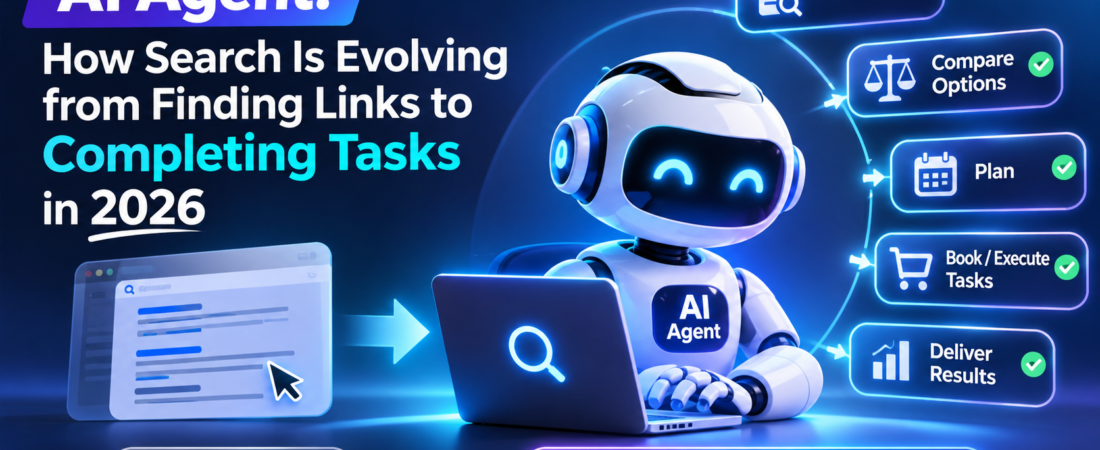
AI Agent: How Search Is Evolving from Finding Links to Completing Tasks in 2026
AI agents are transforming how people search for information, make decisions, and complete everyday tasks. Instead of simply displaying a list of website links, AI-powered search experiences are increasingly helping users research products, compare services, plan activities, and automate multi-step processes.
In 2026, this shift is changing the way people interact with search engines and digital assistants. For businesses and SEO professionals, understanding AI agents is becoming essential to preparing for the future of search.
For years, search engines have followed a familiar pattern. A user enters a query, Google displays a list of websites, and the user visits different pages to find the information they need.
But search is changing.
In 2026, AI-powered search experiences are moving beyond simply providing links and summaries. They are increasingly helping users research options, compare solutions, plan activities, and complete multi-step tasks.
Instead of asking, “Where can I find this information?” people are beginning to ask, “Can you help me get this done?”
This shift represents an important evolution in how people interact with search technology. It also introduces new opportunities and challenges for SEO professionals, businesses, and digital marketers.
An AI Agent can understand user instructions, analyze information, make decisions, and perform multiple steps to achieve a specific goal
1. Traditional Search vs AI-Powered Task Completion
Traditional search engines primarily help users discover information.
For example, someone planning a holiday might search:
“Best hotels in Dubai.”
The search engine displays websites, hotel listings, reviews, and booking platforms. The user then visits several websites, compares prices, checks availability, and makes a reservation.
AI-powered experiences can simplify parts of this process.
A user might instead ask:
“Find me a family-friendly hotel in Dubai for three nights within my budget, compare the best options, and help me plan my stay.”
An AI assistant can potentially research hotels, compare available information, summarize reviews, suggest an itinerary, and, where supported, help the user proceed with a booking.
The difference is significant: the experience is shifting from information discovery towards task assistance.
| Traditional search | AI-powered task assistance |
|---|---|
| Displays relevant links | Provides synthesized answers |
| Requires manual comparisons | Can compare options |
| User navigates multiple websites | AI can coordinate multiple steps |
| Focuses on information discovery | Focuses on helping achieve an outcome |
| Measures clicks and rankings | Also considers task completion and outcomes |
AI does not replace every traditional search process. Rather, both experiences are developing alongside each other.
2. The Rise of Agentic Search
One of the most interesting developments behind this shift is agentic AI.
Unlike a conventional search experience that responds to one query, an AI agent can potentially work through a sequence of related tasks.
For example, a business owner might ask:
“Research five competitors in my industry, compare their SEO strategies, identify keyword opportunities, and prepare a report.”
An AI agent may be able to:
- Understand the objective.
- Break the request into smaller tasks.
- Search for relevant information.
- Compare multiple sources.
- Analyze the findings.
- Prepare a structured report.
This ability to work through multiple steps is changing expectations around digital assistants and search experiences.
Google’s AI Mode and agentic capabilities are examples of how search is moving towards more interactive and action-oriented experiences.
3. Why Is Search Moving Beyond Links?
Several developments are contributing to this transformation.
Conversational AI
People increasingly expect to ask follow-up questions without starting a completely new search.
Instead of entering multiple disconnected queries, they can maintain a conversation and refine their requirements.
AI-Powered Research
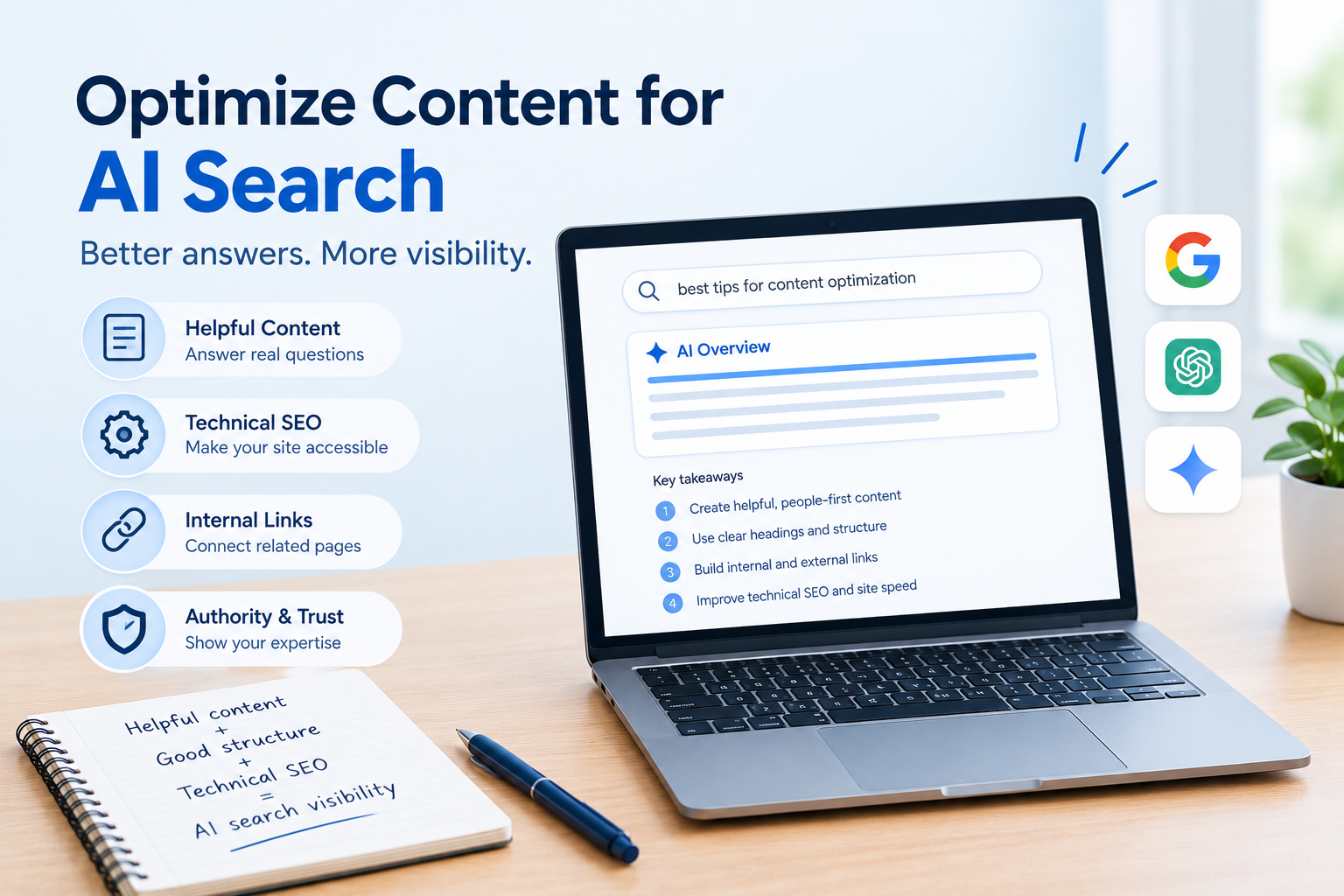
AI systems can synthesize information from multiple sources and present comparisons in a more accessible format.
Task Automation
AI agents are increasingly being developed to interact with digital services and perform supported actions on behalf of users.
Personalization
AI-powered experiences can use the context provided by users to make recommendations more relevant to their needs.
Multimodal Search
Search is no longer limited to typing keywords. Users can interact through text, images, voice, and other supported inputs.
Together, these developments are changing what users expect from search platforms.
4. What Does This Mean for SEO in 2026?
This transformation does not mean traditional SEO is dead.
It means businesses need to think beyond ranking individual pages and consider how their information can be discovered, understood, and used in AI-powered experiences.
Here are five important areas to focus on.
1. Optimize for User Intent, Not Just Keywords
Traditional keyword research often starts with identifying phrases people enter into search engines.
However, conversational AI experiences introduce longer, more detailed requests.
For example:
Traditional query:
“Best CRM software.”
Conversational query:
“Compare three affordable CRM platforms for a small business with email automation and reporting features.”
Businesses should create content that answers specific questions, addresses real problems, and covers the context behind user searches.
2. Build Clear and Structured Content
AI systems need to interpret information accurately.
Use:
- Descriptive headings.
- Clear explanations.
- Relevant examples.
- Comparison tables.
- Frequently asked questions.
- Accurate and updated information.
Well-organized content also improves the reading experience for human visitors.
3. Strengthen Brand Authority
When users ask AI systems to recommend products, services, or businesses, brand information and reputation become increasingly important.
Businesses should invest in:
- Relevant industry publications.
- Digital PR.
- Quality backlinks.
- Expert contributions.
- Genuine customer reviews.
- Consistent brand information.
The objective is to build a credible online presence rather than simply accumulate links.
4. Understand AEO and GEO
Answer Engine Optimization (AEO) focuses on making content useful for answering questions through answer engines.
Generative Engine Optimization (GEO) focuses on improving the visibility and representation of brands in generative AI responses.
Both complement traditional SEO by addressing how users discover information through AI-powered experiences.
5. Measure More Than Rankings
As search experiences evolve, businesses should consider additional performance indicators.
These include:
- Organic search traffic.
- AI referral traffic.
- Brand mentions in AI responses.
- AI-generated answer citations.
- Qualified leads.
- Conversions.
- Brand search growth.
Rankings remain important, but they are only one part of a broader visibility strategy.
5. How Businesses Should Prepare for the Future of Search
Businesses should start adapting their digital strategies rather than waiting for AI-powered search to become the only way people discover information.
A practical approach includes:
First: Maintain strong technical SEO, including crawlability, indexing, website performance, and mobile usability.
Second: Create helpful content that addresses real customer questions and purchasing decisions.
Third: Develop brand authority through credible publications, expert insights, and relevant online mentions.
Fourth: Make product and service information clear, accurate, and easy to understand.
Fifth: Monitor visibility across traditional search engines and AI-powered discovery platforms.
Businesses that combine these practices will be better positioned to adapt as search technology continues to develop.
6. The Future: Search Will Become More Action-Oriented
The future of search is not simply about finding the right website.
It is increasingly about helping people reach the outcome they are looking for.
Someone researching a product may want AI to compare alternatives. A business owner may want an assistant to research competitors. A traveller may want help planning an entire trip.
These experiences suggest a broader shift from search engines as information directories towards AI-powered assistants that can help users complete complex tasks.
However, this transformation will take time. Not every platform can execute transactions, access external services, or complete actions without user approval. Reliable information, permissions, and human oversight remain essential.
Final Thoughts
Search is entering a new phase.
Traditional SEO helped websites become discoverable through search engine rankings. AI-powered search is expanding the experience by helping users understand information, evaluate choices, and complete tasks.
For SEO professionals, this creates an opportunity to rethink optimization strategies.
The goal should no longer be limited to getting a page to rank. It should also include building a trustworthy brand, providing useful information, and ensuring that potential customers can discover and understand your business across different search experiences.
The future of search isn’t just about finding links. It’s about getting things done.
How an AI Agent Understands and Completes Tasks
An AI Agent can understand user instructions, analyze information, make decisions, and perform multiple actions to achieve a specific objective. This makes AI agents different from traditional search tools that primarily display information and website links.
AI Agent Technology and the Future of Search
An AI Agent is changing how people interact with digital platforms. Instead of manually searching multiple websites, users can increasingly rely on AI-powered assistants to research topics, compare options, and organize information.
Why Businesses Need an AI Agent Strategy
Businesses should understand how AI Agent technology can influence customer experiences, digital marketing, and online discovery. Companies that adapt their digital strategies can prepare for changing customer expectations.
AI Agent Applications in Digital Marketing
An AI Agent can support digital marketing activities such as competitor research, keyword analysis, content planning, and data interpretation. These capabilities can help marketing teams improve productivity and make more informed decisions.
How AI Agents Influence SEO
SEO professionals need to understand how an AI Agent interprets information and responds to user requests. Creating helpful, accessible, and well-structured website content remains important as AI-powered search develops.
AI Agent vs Traditional Search Engine
A traditional search engine primarily helps users discover websites, whereas an AI Agent can potentially coordinate several steps, summarize information, compare alternatives, and perform supported tasks.
What Is Next for AI Agent Technology?
The future of AI Agent technology will likely involve more advanced digital assistants capable of handling research, planning, recommendations, and multi-step workflows. Businesses should monitor these developments and adapt their online visibility strategies.